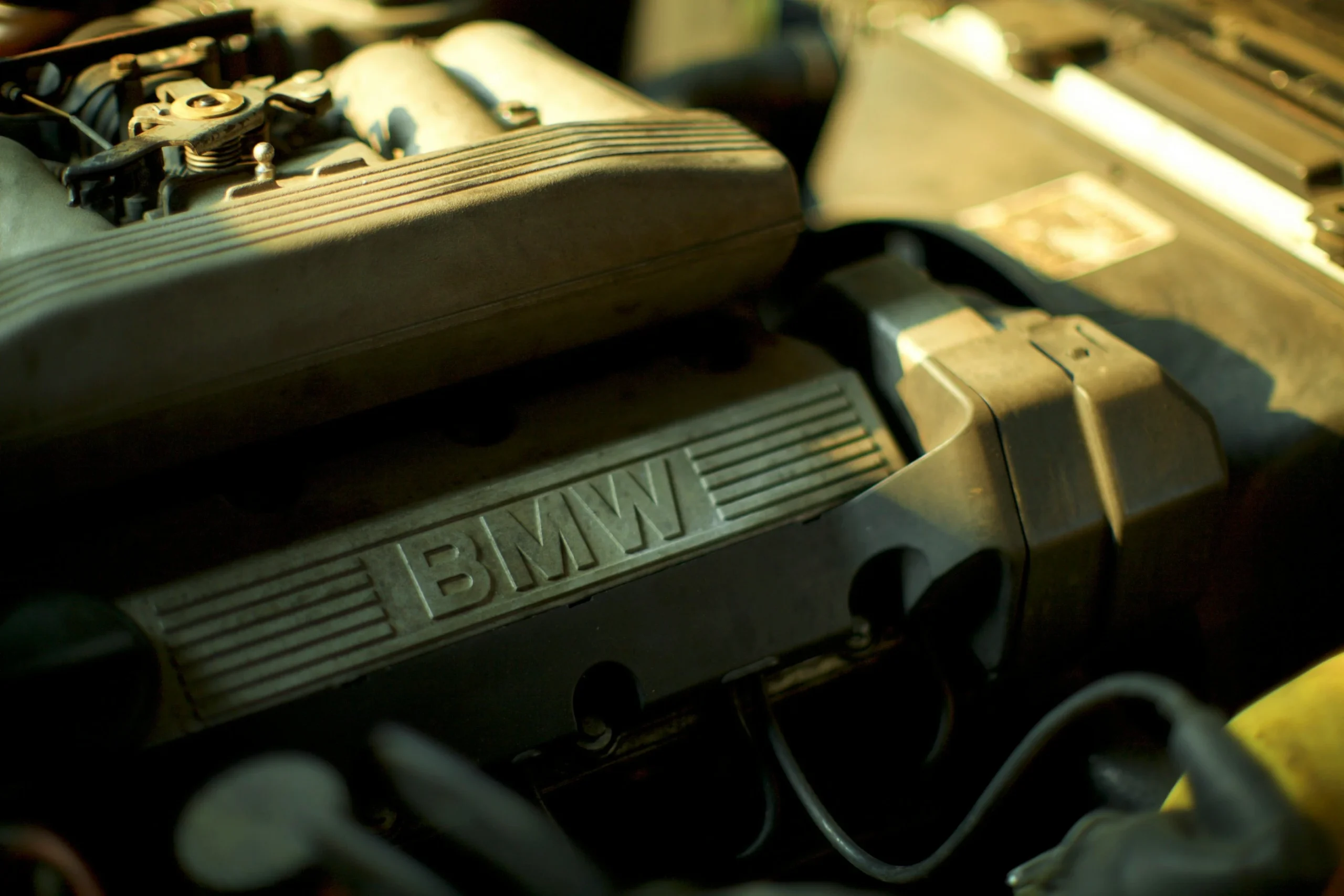
BMW Spark Plug Change: What Nobody Tells You Before You Do It
So last summer, my cousin’s BMW 3 Series started acting really weird. It was shaking at idle, fuel economy dropped like crazy, and sometimes it felt like the engine was just hesitating. Like it forgot what it was supposed to do.
We took it to a local mechanic first. Guy said nothing was wrong, charged us for a diagnostic, and sent us home. Two weeks later, same issue. That’s when I decided to open YouTube, roll up my sleeves, and figure it out myself.
Turned out it was the spark plugs. Four of them. All worn out, with gaps so wide you could practically see the problem with your eyes.
That experience taught me more about BMW engines in one weekend than I learned in years of just driving them.
Why BMWs Are Picky About Spark Plugs
Here’s the thing most people don’t realize. A BMW is not your regular Toyota or Honda. The engine is tuned tight, the ignition timing is precise, and the car actually expects specific spark plugs, not just any random ones you grab off the shelf at your local parts store.
Using the wrong plug in a BMW can cause misfires, rough idle, or even trigger the check engine light. I learned this the hard way when I initially bought some cheap aftermarket plugs. The car ran worse than before for two days before I did proper research and got the right ones.
BMW mostly uses NGK or Bosch spark plugs from the factory. For most N-series engines like the N52, N55, or B46/B48, you will find that the OEM plugs are iridium tipped. These last longer, burn cleaner, and are honestly worth the extra few dollars.
Signs Your BMW Needs New Spark Plugs
Before I even get into the how-to part, let me tell you what to look for. Because most people wait too long and the car literally tells you something is wrong.
You will notice rough idle first. The car sits at a red light, and it is vibrating slightly more than usual. That is your engine misfiring on one or more cylinders.
Then there is the hesitation during acceleration. You press the gas, and there is this tiny pause before the car responds. Feels like the engine is thinking about it.
Fuel consumption also goes up noticeably. If you are getting fewer kilometers per liter than usual and nothing else changed, degraded spark plugs are a strong candidate.
And of course, the check engine light. Most of the time, P0300 to P0304 codes mean cylinder misfires. A basic OBD2 scanner like the Veepeak or Launch Creader VII can pull these codes in seconds. These scanners are inexpensive and genuinely useful to own if you have a car.
How Often Should You Change BMW Spark Plugs
This depends on your engine and the type of plug.
For standard copper plugs, which BMW does not really use anymore, change around every 30,000 km.
For iridium or platinum plugs, which is what your BMW almost certainly has, the interval is typically between 60,000 and 100,000 km. Some manuals even say up to 120,000 km, but honestly, I would not push it that far, especially if you are driving hard or on poor-quality fuel.
My cousin’s car had the original plugs from the factory at nearly 95,000 km. No wonder it was struggling.
What You Will Need Before Starting
Let me be specific here because this is where people either save time or waste it.
You will need a torque wrench. This is non-negotiable. BMW cylinder heads are aluminum, and over-tightening a spark plug into aluminum will damage the threads. I use a Tekton 1/2-drive torque wrench, and it has never let me down. Tighten plugs to around 25 Nm typically, but always check your specific engine spec.
You will need a spark plug socket. A standard 5/8 inch or 16mm thin-wall socket with a rubber insert to hold the plug. The rubber insert matters because it grips the ceramic insulator and stops the plug from dropping into the engine bay.
An extension bar for your ratchet is important too. On some BMW engines, the plugs sit deep in the valve cover. Without a proper extension, you simply cannot reach them.
Anti-seize compound is optional, but I recommend it, especially if the car is older. A tiny bit on the plug threads prevents them from seizing in the head over time. Some modern iridium plugs already come pre-coated, so check the packaging before adding more.
Dielectric grease for the ignition coil boots. A small dab inside each boot before reinstalling helps prevent moisture and improves the electrical connection. A tube costs almost nothing.
And of course, the spark plugs themselves. For most BMW four-cylinder B48 engines, NGK ILZKBR7B8DG is the common OEM equivalent. For the N52 six-cylinder, NGK ILZKAR8H8S is a popular option. Always match to your exact engine code, which is usually on a sticker under the hood or in your owner’s manual.
Step by Step: The Actual Process
I am going to walk you through this the way I would explain it to a friend standing next to me in the garage.
Step 1: Let the engine cool down completely.
Never do this on a hot engine. Aluminum threads can be damaged more easily when hot, and you risk burning your hands. Wait at least an hour after driving.
Step 2: Remove the engine cover.
On most modern BMWs, there is a plastic engine cover sitting on top. It either clips off or has a few bolts. Remove it and set it aside. Under this cover you will see the ignition coils sitting directly on top of each cylinder.
Step 3: Disconnect and remove the ignition coils.
Each coil has a small electrical connector. Press the clip and pull it straight off. Then there is usually a single bolt holding the coil down. Remove that bolt, then pull the coil straight up. It can be a bit stuck from the heat over time, so wiggle it gently. Do not yank hard or you will damage the coil boot.
Label each coil with masking tape as you remove them. Write Cyl 1, Cyl 2, and so on. Always reinstall each coil back on the same cylinder it came from. This is a habit I picked up after reading some forums, and it avoids cross-contamination of wear patterns.
Step 4: Use the extension to get the spark plug socket down the tube.
Some BMW engines have deep plug wells. You will need a 6-inch or longer extension here. Fit the socket, drop it in, and turn counterclockwise to loosen. The first one is always the tightest.
Step 5: Remove the old plug and inspect it.
This part is actually interesting. The old plug tells a story. If the electrode tip is light grey or tan, combustion was healthy. “Black and sooty” means a rich fuel mixture. Oily deposits mean possible oil burning. White or blistered means the engine ran too hot at some point.
My cousin’s plugs were dark grey, and the electrode tips were completely worn down. Gaps had opened way beyond spec. No wonder the engine was misfiring.
Step 6: Check the gap on the new plugs.
Even brand-new OEM-equivalent plugs sometimes need gap verification. Use a gap tool, which costs almost nothing, to confirm the gap matches your engine specification. For most BMW engines, this is around 0.7 mm to 0.9 mm. Adjust gently if needed by bending the ground electrode only. Never touch the center electrode.
Step 7: Install the new plug by hand first.
This is critical. Thread the plug in by hand, without the ratchet. Just use your fingers or the socket with the extension held loosely. If it feels resistance immediately, stop. The plug may be cross-threaded. Starting a plug on a slight angle can strip the aluminum threads in the head, and that repair is expensive and painful.
Once it spins freely by hand for the first few turns, then use the ratchet to snug it down, and then your torque wrench to the final spec.
Step 8: Put a small dab of dielectric grease inside each coil boot.
Just the inside lip where it contacts the plug. Not too much, just a thin coating. Then reinstall each coil, torque the bolt, and reconnect the electrical connector until you hear it click.
Step 9: Reinstall the engine cover and start the car.
The first startup might sound slightly rough for 30 seconds as the new plugs seat. This is normal. Let it idle for a couple of minutes. If it smooths out, you are done.
If the check engine light was on before, clear the codes with your OBD2 scanner and drive normally for a day. The light should not return if plugs were the issue.
Mistakes I Made That You Should Avoid
I over-tightened the first plug on my first DIY spark plug job years ago. Not on a BMW, thankfully, but the lesson stuck. Aluminum head, stripped thread, costly repair. Always use a torque wrench. Always.
I also once forgot to reconnect one ignition coil connector properly. The engine ran on three cylinders until I figured it out twenty minutes later. Double-check every connection before closing everything up.
And please do not cheap out on the plugs. A set of proper NGK iridium plugs for a BMW four-cylinder costs around 30 to 50 USD depending on where you source them. Generic no-name plugs from a random shop will cost less but can cost you more in the long run through poor performance and potential engine issues.
DIY vs Workshop: What Makes More Sense
If you are even slightly mechanically comfortable, this is a job you can absolutely do at home. It takes about 45 minutes to an hour for a four-cylinder, maybe 90 minutes for a six.
A BMW dealership or specialist workshop will charge labor on top of parts. Depending on your location, this job can run anywhere from 150 to 400 USD all in at a professional shop.
DIY will cost you the price of plugs plus maybe a one-time investment in a torque wrench if you do not have one. The wrench pays for itself after two or three jobs.
After the Spark Plug Change
My cousin’s 3 Series came alive after we did this job. The rough idle disappeared. Acceleration felt crisp again. He texted me the next day saying the fuel average had already improved noticeably in just the first tank.
It is funny how one small part, maybe the size of your thumb, can make such a massive difference in how an engine feels. But that is how a BMW works. Everything has to be right or it complains.
If you have been putting off this service, just do it. It is not as intimidating as it looks, and the car genuinely thanks you for it.
Frequently Asked Questions
Q: Why is my check engine light still on after changing BMW spark plugs?
This is very common. The check engine light does not go off automatically after a spark plug change. You need to clear the fault codes using an OBD2 scanner. Grab a basic one like the Veepeak or Launch Creader, delete the codes, and then drive 20 to 30 km normally. If the light does not come back, the problem is solved.
Q: Can I use any spark plug in my BMW?
No, and this is one of the most common mistakes people make. BMW engines require plugs with a specific heat range and electrode design. Stick with NGK or Bosch OEM-equivalent plugs. Always confirm the part number against your engine code. Cheap generic plugs might save you a few dollars upfront, but they almost always lead to misfires and rough idle.
Q: How much does a BMW spark plug change cost?
If you do it yourself, you are only paying for the plugs. A single NGK iridium plug typically costs between 7 and 15 USD. For a four-cylinder engine, you need four plugs, so roughly 30 to 60 USD total. If you take it to a workshop, labor gets added, and the total can land anywhere between 150 and 400 USD depending on your engine type and location.
Q: How many kilometers or miles are there between BMW spark plug changes?
Iridium and platinum plugs, which are what modern BMWs use, typically last between 60,000 and 100,000 km, or about 40,000 to 60,000 miles. Some factory specs say up to 120,000 km, but that is pushing it. If your fuel quality is average or you do a lot of city driving, check them at 60,000 km to be safe. Do not rely on the interval alone if the car is showing symptoms.
Q: Should I replace the ignition coils when changing BMW spark plugs?
Not necessarily every time. But if a coil boot is cracked, or you see burn marks or carbon buildup on the coil, replace it while you are in there. Some people swap one coil as a precaution whenever they have misfires. A genuine BMW ignition coil typically costs between 25 and 80 USD depending on the brand and engine.
Q: Why is my BMW idling rough after a spark plug change?
Do not panic. A slightly rough idle for the first 30 seconds to two minutes after a plug change is completely normal. The new plugs are seating. If it is still rough after five minutes, check that every ignition coil connector is clicked in properly. This is the most common mistake. One connector not fully seated and you are down a cylinder.
Q: Is a torque wrench really necessary, or can I just use a regular ratchet?
On a BMW, yes, a torque wrench is absolutely necessary. The engine head is aluminum. Over-tighten the plug, and you strip the threads. That repair is far more expensive and complicated than the spark plug job itself. A decent torque wrench from brands like Tekton, Craftsman, or EPAuto costs around 25 to 50 USD and will last you years.
Q: What special tools do I need to change BMW spark plugs?
You do not need much. A thin-wall spark plug socket, either 5/8 inch or 16 mm, with a rubber insert. A 6-inch ratchet extension. A torque wrench. And a spark plug gap gauge, which costs practically nothing. That is it. With these four things you can do the job cleanly at home.
Q: Should I change all spark plugs at once or just the bad one?
Always change all of them at the same time. If one is worn out, the rest are the same age and just as close to the end of their life. Replacing one and leaving the others means you will be doing the exact same job again in a few months. Save yourself the time and do all of them in one go.
Q: Will my BMW fuel economy improve after changing spark plugs?
Yes, and the difference is noticeable. Worn plugs cause incomplete combustion, which means the engine burns more fuel to produce the same power. After fresh plugs, most people report a visible improvement in fuel economy within the first tank. It is one of those maintenance jobs where you actually feel the difference right away.
Have a question about your specific BMW model or engine? Drop it in the comments below. Happy to help.

Adnan Aslam is passionate about helping everyday drivers understand their vehicles better. Through CarFixedExpert.com, he shares clear, step-by-step car maintenance guides written in simple language. His goal is to make basic repairs and maintenance easy, safe, and affordable for everyone.
He believes that even small car knowledge can save money and prevent major problems. His content focuses on practical advice, safety awareness, and beginner-friendly explanations.