What Is a Spark Plug Socket
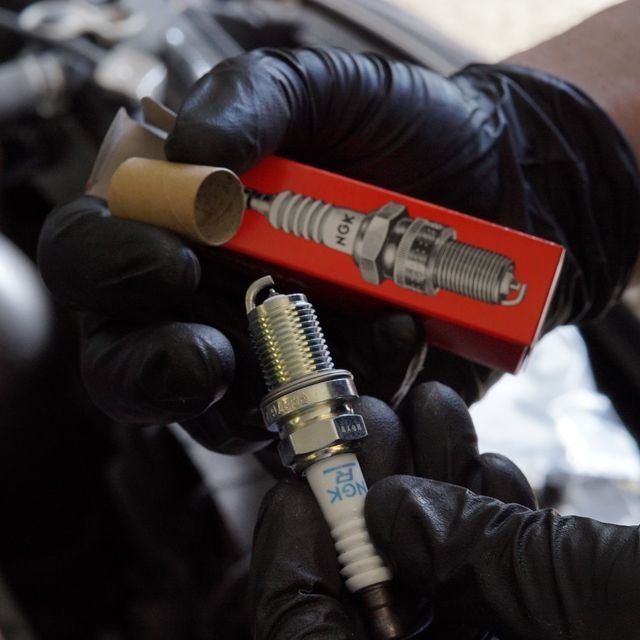
A spark plug socket is a special tool used to remove and install spark plugs in a car, motorcycle, or small engine. It looks like a regular socket but it is deeper and has a rubber or magnetic insert inside. This insert holds the spark plug safely and protects the ceramic part from cracking during removal and installation.
Without the right spark plug socket, you can easily damage the plug or drop it deep inside the engine bay. This is why using the correct spark plug socket is very important for anyone who wants to change spark plugs at home or in a workshop.
A spark plug socket connects to a ratchet handle or torque wrench just like any other socket. But because spark plugs sit deep inside the engine, the socket is made longer and narrower so it can reach the plug without any problem.
What Is a Spark Plug Socket Wrench
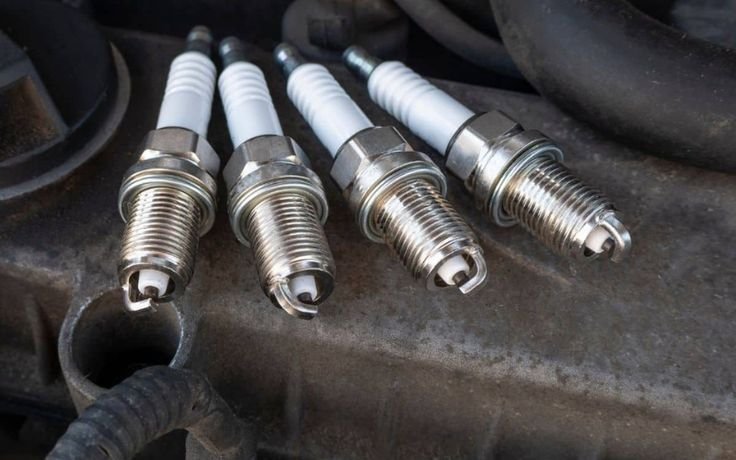
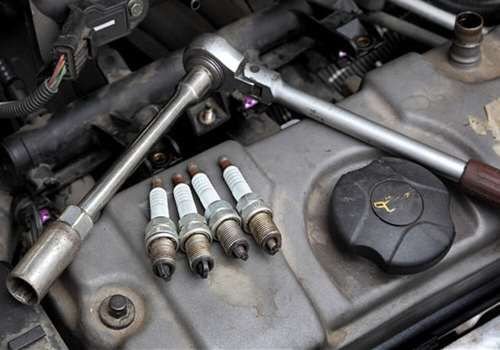
A spark plug socket wrench is the complete tool that includes both the socket and the handle used to turn it. The wrench gives you the grip and turning power needed to loosen or tighten the spark plug. Most spark plug socket wrenches come with a ratchet handle, an extension bar, and the spark plug socket itself.
The extension bar is important because spark plugs are often located deep inside the engine and you need extra length to reach them. Some spark plug socket wrenches also come with a swivel joint that lets you reach plugs at an angle without damaging the surrounding wires or engine parts.
Using a torque wrench with your spark plug socket is the best way to make sure you tighten the plug to the correct setting. Too loose and the plug can vibrate out on its own. Too tight and you can damage the threads in the cylinder head which is a very expensive repair.
What Are Spark Plug Socket Sizes
One of the most important things to know is that spark plug sockets come in different sizes. Using the wrong size means you will not be able to remove or install the plug properly and you could damage both the plug and the socket.
The size of the spark plug socket you need depends on the size of the hex nut on the spark plug. The hex nut is the six sided part of the plug that the socket grips onto. Here are all the common spark plug socket sizes and which vehicles they are used for.
5/8 inch (16mm) is the most common spark plug socket size and fits most modern cars, trucks, and SUVs. If you own a regular passenger car this size will most likely work for you. It is also commonly used for lawn mowers and small engines.
13/16 inch is the size used for older American cars and classic vehicles. If you own a vintage muscle car or an older domestic vehicle this is the size you will need.
9/16 inch is used for some Ford models especially the Ford Triton engines. If you own a Ford and the 5/8 inch socket does not fit try this size.
14mm thin wall sockets are used for many European and Asian vehicles. The thin wall design is important here because the spark plugs in these engines sit in a very tight and narrow space and a regular thick socket will not fit inside.
18mm is a size commonly used for motorcycles and some larger engines including Harley Davidson V Twin engines.
3/4 inch is another size used for some small engines like generators and garden equipment.
7/8 inch is used for older vehicles, tractors, and some antique cars.
Spark Plug Socket Size Chart
Here is a simple and easy size chart to help you find the right socket for your vehicle.
5/8 inch (16mm): Most modern cars, SUVs, trucks, lawn mowers
13/16 inch: Older American cars, classic vehicles
9/16 inch: Some Ford models with Triton engines
14mm thin wall: European cars, many Asian imports
18mm: Motorcycles including Harley Davidson
3/4 inch: Generators, small garden engines
7/8 inch: Tractors, antique and vintage vehicles
If you are not sure which size you need, check your vehicle owner manual, search online using your car year, make, model, and engine size, or take the old spark plug to an auto parts store and ask them to match the right socket size for you.
Types of Spark Plug Sockets
There are different types of spark plug sockets available and knowing the difference helps you pick the right one for your needs.
Rubber Insert Spark Plug Socket
This is the most common type. It has a rubber sleeve inside that grips the ceramic insulator of the spark plug. When you pull the socket back after loosening the plug the rubber holds the plug inside the socket so it does not fall into the engine. This type gives good protection to the plug and is great for everyday use.
Magnetic Spark Plug Socket
This type uses a small magnet inside instead of rubber. The magnet attaches to the metal shell of the spark plug and holds it securely. Many professionals prefer this type because the magnetic grip is very strong and reliable. It works well in tight spaces where you need to hold the plug with one hand.
Thin Wall Spark Plug Socket
Some engines especially European models have spark plugs placed in very narrow wells. A regular socket is too thick to fit into these spaces. A thin wall socket is designed with thinner walls so it can fit into tight areas without touching the surrounding parts. If your regular socket does not fit down into the plug well you need a thin wall socket.
Deep Spark Plug Socket
This type is longer than a standard socket and is designed for engines where the spark plug sits very deep in the cylinder head. The extra length allows the socket to reach all the way down to the plug without needing a long extension bar.
Swivel Spark Plug Socket
Some spark plugs are placed at an angle or in a spot that a straight socket cannot reach easily. A swivel socket has a flexible joint that lets you work at an angle. This is very useful in modern engines where space is limited and the plugs are not sitting in a straight accessible position.
Tools You Need to Change Spark Plugs at Home
Before you start changing spark plugs you need to gather all the right tools. Here is a complete list of everything you will need.
Spark plug socket in the correct size for your vehicle. Ratchet handle to turn the socket. Extension bar to reach deep plugs. Torque wrench to tighten the plug to the correct setting. Spark plug gap gauge to check and adjust the new plug gap. Dielectric grease to apply inside the spark plug boot. Anti seize lubricant to apply on the plug threads for easy future removal. Compressed air or a small brush to clean the plug area. New spark plugs that match your vehicle specifications. Safety gloves and eye protection.
Having all these tools ready before you start saves time and prevents problems during the job.
How to Change Spark Plugs at Home
Changing spark plugs yourself at home is not difficult if you follow the right steps carefully. This is one of the easiest and most money saving maintenance jobs any car owner can do. Here is a complete step by step guide.
Step 1: Let the Engine Cool Down Completely
Never work on a hot engine. Wait at least 30 minutes after turning off the car before you touch anything. A hot engine can burn you and hot spark plugs can be damaged if you remove them while the metal is still expanded from heat.
Step 2: Gather Your Tools and New Spark Plugs
Before opening the hood make sure you have everything ready. Check your vehicle manual to find out the correct spark plug type and size for your car. Buy the new plugs from a trusted auto parts store and confirm they match the old ones.
Step 3: Disconnect the Battery
For safety disconnect the negative terminal of your car battery first using an adjustable wrench. This prevents any electrical issues while you work near the ignition system.
Step 4: Open the Hood and Locate the Spark Plugs
Open the hood and find the spark plugs. They are usually located on top or on the side of the engine block and are connected to thick wires or ignition coil packs. A 4 cylinder engine has 4 spark plugs, a 6 cylinder has 6, and an 8 cylinder has 8. If you are not sure where they are check your vehicle manual.
Step 5: Clean the Area Around the Plugs
Use compressed air or a small brush to blow away any dirt, dust, or debris around the spark plug area. This is important because if any dirt falls into the cylinder when you remove the plug it can cause engine damage.
Step 6: Remove the Spark Plug Wire or Ignition Coil
Gently pull off the wire or coil pack connected to the first spark plug. Always pull from the rubber boot at the end of the wire, never from the wire itself. Pulling by the wire can damage it. If your car uses coil on plug ignition you will need to remove a small bolt holding the coil in place before pulling it off. Label each wire or coil so you know which one goes back to which plug.
Step 7: Attach the Socket and Loosen the Plug
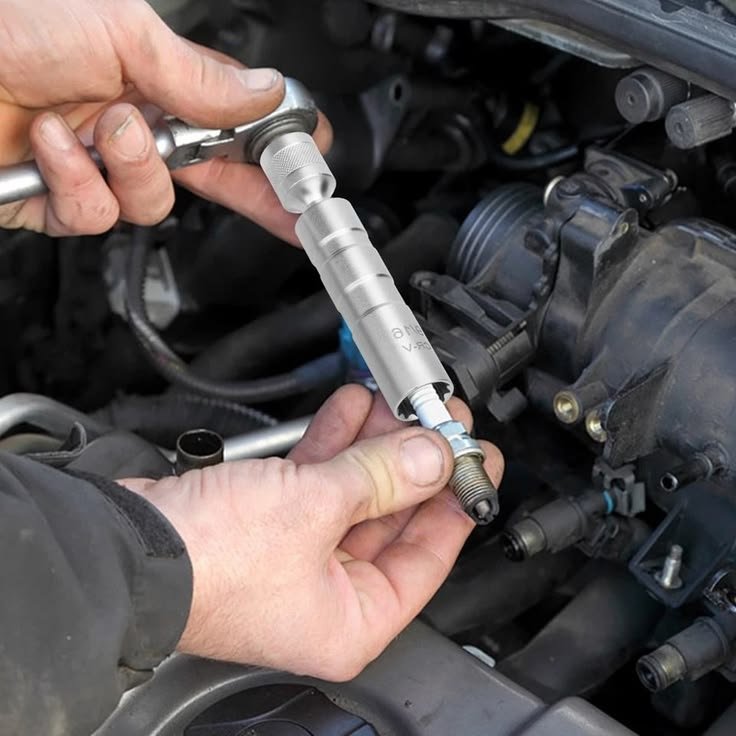
Put the correct size spark plug socket onto your extension bar and ratchet handle. Lower the socket straight down onto the spark plug. Make sure it is sitting fully and straight on the plug before turning. Turn counterclockwise to loosen the plug. If the plug feels very tight apply steady slow pressure. Never force it or you risk breaking the plug inside the engine.
Step 8: Remove the Old Spark Plug
Once the plug is loose you can turn it the rest of the way by hand. The rubber or magnetic insert inside the socket will hold the plug so it does not fall. Pull it out carefully and set it aside.
Step 9: Inspect the Old Spark Plug
Take a close look at the old plug before throwing it away. The condition of the old plug tells you a lot about your engine health.
If the plug tip is light brown or grayish it means the engine is running normally.
If the plug is black and covered in carbon or soot it means the engine is running too rich, meaning it is burning too much fuel.
If the plug is white or very light it means the engine is running too lean, meaning it is not getting enough fuel.
If there is oil on the plug it could mean there is an oil leak inside the engine.
If the plug is melted or blistered the engine may be overheating.
Step 10: Check and Set the Gap on the New Plug
Before installing the new spark plug you need to check the gap. The gap is the small space between the center electrode and the ground electrode at the tip of the plug. This gap must be set to the exact measurement recommended in your vehicle manual.
Use a spark plug gap gauge to measure the gap. If it is too wide gently press the ground electrode down. If it is too narrow carefully lift it with the gap tool. Never touch or bend the center electrode. The correct gap is very important for proper engine performance and fuel efficiency.
Step 11: Apply Anti Seize Lubricant
Apply a very small amount of anti seize lubricant on the threads of the new spark plug. This makes it much easier to remove the plug in the future and prevents the threads from seizing up inside the cylinder head. Be careful not to get any lubricant on the electrode or the tip of the plug.
Step 12: Install the New Spark Plug by Hand First
Place the new plug into the socket and carefully lower it into the plug hole. Start threading it into the cylinder head by hand. This is a very important step. Threading by hand helps you feel if the plug is going in straight. If you feel any resistance stop immediately and back it out. Never use the ratchet to start threading the plug as this can cause cross threading which destroys the cylinder head threads.
Step 13: Tighten with the Torque Wrench
Once the plug is hand tight use your torque wrench to tighten it to the correct specification. For most petrol engines with aluminum cylinder heads the torque is between 11 and 20 foot pounds. For cast iron heads it can be up to 30 foot pounds. Always check your vehicle manual for the exact specification. Over tightening is one of the most common mistakes and can crack the plug or strip the threads.
Step 14: Apply Dielectric Grease to the Boot
Apply a small amount of dielectric grease inside the spark plug boot or on the coil tip before reconnecting. This grease prevents the boot from sticking to the plug and makes future removal easier. It also helps prevent misfires caused by moisture getting inside the connection.
Step 15: Reconnect the Wire or Coil Pack
Push the boot or coil pack back onto the new spark plug until you feel or hear a firm click. Make sure it is fully seated and not loose. A loose connection will cause the engine to misfire.
Step 16: Repeat for All Spark Plugs
Change one spark plug at a time. Never remove all plugs at once as this can mix up the wires and cause engine problems. Repeat steps 6 through 15 for each remaining spark plug.
Step 17: Reconnect the Battery
Reconnect the battery starting with the positive terminal first then the negative terminal.
Step 18: Start the Engine and Test
Start the engine and listen carefully. It should start smoothly and run without any unusual sounds or shaking. If you notice misfires or rough running double check that all plugs are tight and all wires or coils are properly connected. If the check engine light was on before due to worn plugs it should turn off after a few minutes of driving.
How Often Should You Change Spark Plugs
Knowing when to change spark plugs is just as important as knowing how to change them. Changing them on time keeps your engine running smoothly and improves fuel economy.
Standard copper spark plugs should be changed every 30,000 miles or roughly every 2 years depending on driving conditions.
Platinum spark plugs last longer and can go between 60,000 and 80,000 miles before needing replacement.
Iridium spark plugs are the longest lasting type and can go up to 100,000 miles before they need to be changed.
However if you notice any of the symptoms listed below you should check and replace your spark plugs sooner regardless of mileage.
Engine misfires or rough idle. Poor fuel economy, meaning your car is using more fuel than usual. Difficulty starting the car especially in cold weather. Lack of power or slow acceleration. Check engine light turning on.
Signs of a Worn or Bad Spark Plug
Sometimes you do not need to wait for the mileage interval. Your car will tell you when the spark plugs need to be changed. Here are the most common signs of a bad spark plug.
Rough engine idle is one of the first signs. The engine shakes or vibrates more than usual when the car is stopped or in neutral.
Hard starting means the car takes longer than normal to start or cranks several times before the engine fires.
Engine misfires feel like a sudden jerk or stutter while driving, especially during acceleration.
Poor fuel economy means you are filling up the tank more often than usual without changing your driving habits.
Loss of power means the car feels sluggish and does not respond well when you press the accelerator.
Check engine light coming on is a direct warning from the car’s computer that something is wrong with the ignition system or engine performance.
If you notice any of these signs check your spark plugs as soon as possible. A bad spark plug left unattended can cause damage to the ignition coils, catalytic converter, and engine over time.
Can You Use a Regular Socket for Spark Plugs
This is a question many people ask. Technically you can use a regular deep socket to remove or install spark plugs if it is the correct size. However it is not recommended for a few reasons.
A regular socket does not have the rubber or magnetic insert to hold the plug. This means the plug can fall out of the socket and drop into the engine bay which is very difficult to deal with. A regular socket can also crack or chip the ceramic insulator of the spark plug which ruins the plug completely. A dedicated spark plug socket protects the plug and makes the job much easier and faster.
Spark Plug Socket vs Regular Socket
Here is a simple comparison between a spark plug socket and a regular socket so you can understand the difference clearly.
A spark plug socket is deeper than a regular socket to fully cover the entire length of the spark plug. It has a rubber or magnetic insert to protect the ceramic insulator and hold the plug securely. It is available in thin wall versions to fit into tight engine bays. A regular socket has none of these features and can scratch, crack, or drop the plug.
For best results always use a dedicated spark plug socket. It is a low cost tool that can save you from very expensive mistakes.
Common Mistakes to Avoid When Changing Spark Plugs
Many people make small mistakes when changing spark plugs that lead to bigger and more costly problems. Here are the most common ones and how to avoid them.
Using the wrong socket size is the most common mistake. A socket that does not fit properly can round off the hex nut on the plug making it nearly impossible to remove. Always confirm the correct size before you start.
Working on a hot engine is dangerous and can damage the plug threads. Always wait at least 30 minutes for the engine to cool down completely.
Cross threading the new plug is a serious mistake. Always start threading the plug by hand. If you feel resistance back it out and try again. Never force it with the ratchet or socket.
Overtightening the spark plug can crack the ceramic insulator or strip the threads in the cylinder head. Always use a torque wrench and follow the correct specification.
Forgetting to check the gap on the new plug is another mistake. An incorrect gap causes misfires and poor engine performance. Always check and adjust the gap before installation.
Not labeling the spark plug wires can cause a lot of confusion. If you mix up the wires the engine will misfire or not start at all. Always label or photograph the wires before removing them.
How to Choose the Best Spark Plug Socket
When buying a spark plug socket here are the important things to keep in mind.
Size is the most important factor. Make sure you buy the correct size for your vehicle. If you work on multiple vehicles consider buying a set that includes 5/8 inch, 13/16 inch, and 14mm thin wall sockets to cover most situations.
Material matters too. Look for sockets made from chrome vanadium steel. This material is strong, durable, and does not rust easily. It can handle high torque without bending or cracking.
Rubber insert or magnetic. Both types work well. Rubber inserts give a softer grip and protect the plug better. Magnetic sockets give a firmer hold and are preferred by professionals.
Thin wall design. If you drive a European or Asian car make sure the socket has a thin wall design so it can fit into narrow plug wells.
Brand quality. Stick to known brands like Tekton, Stanley, Craftsman, or GearWrench. Cheap low quality sockets can slip or break and damage your spark plugs.
Frequently Asked Questions About Spark Plug Sockets
What size socket do I need for spark plugs?
The most common size is 5/8 inch which fits most modern cars. Older American cars use 13/16 inch. Some Ford models use 9/16 inch. European and Asian cars often use 14mm thin wall sockets. Always check your vehicle manual to confirm the right size.
What is a spark plug socket wrench used for?
A spark plug socket wrench is used to remove and install spark plugs. It includes the socket, an extension bar, and a ratchet handle. The wrench gives you the leverage needed to loosen tight plugs and the control needed to tighten new ones to the correct torque.
Can I change spark plugs at home without a torque wrench?
You can change them without a torque wrench but it is not recommended. Without a torque wrench you risk overtightening or undertightening the plug. Both can cause serious engine problems. A basic torque wrench is not expensive and is well worth buying for this job.
How do I know if my spark plugs need to be changed?
Common signs include rough engine idle, difficulty starting, poor fuel economy, engine misfires, loss of power, and the check engine light turning on. If you notice any of these signs have your plugs checked as soon as possible.
What is the difference between a magnetic and rubber insert spark plug socket?
A magnetic socket uses a magnet to hold the spark plug while a rubber insert socket uses a soft rubber sleeve. Both do the same job. Magnetic sockets hold the plug more firmly. Rubber insert sockets give better protection to the ceramic insulator.
Is it hard to change spark plugs yourself?
No it is one of the easiest DIY car maintenance tasks. As long as you have the right tools, follow the steps carefully, and take your time, most car owners can change their spark plugs at home in about one to two hours.
Conclusion
A spark plug socket is a small but very important tool for any car owner or mechanic. Knowing the right size and type for your vehicle can save you time, money, and frustration. The most common spark plug socket sizes are 5/8 inch for most modern cars, 13/16 inch for older vehicles, and 14mm thin wall for European and Asian models.
Changing spark plugs at home is easy and saves you the cost of a mechanic. All you need is the right spark plug socket, a torque wrench, some basic tools, and the steps in this guide. Always use a dedicated spark plug socket with a rubber or magnetic insert to protect the plug. Always check the gap before installing a new plug. Always use a torque wrench to tighten to the correct specification.
Regular spark plug maintenance keeps your engine running smoothly, improves fuel efficiency, and helps you avoid costly repairs down the road. If you are also dealing with an overheating engine be sure to read our detailed guide on car engine overheating causes and fixes as worn spark plugs and engine heat problems are often connected.

Adnan Aslam is passionate about helping everyday drivers understand their vehicles better. Through CarFixedExpert.com, he shares clear, step-by-step car maintenance guides written in simple language. His goal is to make basic repairs and maintenance easy, safe, and affordable for everyone.
He believes that even small car knowledge can save money and prevent major problems. His content focuses on practical advice, safety awareness, and beginner-friendly explanations.