
I Let My Car Pull to the Left for Two Months. Here Is What That Mistake Cost Me
I thought I was just tired.
Every time I drove on the highway, I noticed my hands were working a little harder than usual. Not a lot. Just enough to feel like the car wanted to drift left if I relaxed my grip even slightly.
I told myself it was the road surface. Highways are sometimes slightly sloped for drainage, right? So I convinced myself that was it. Road camber. Totally normal. Nothing to worry about.
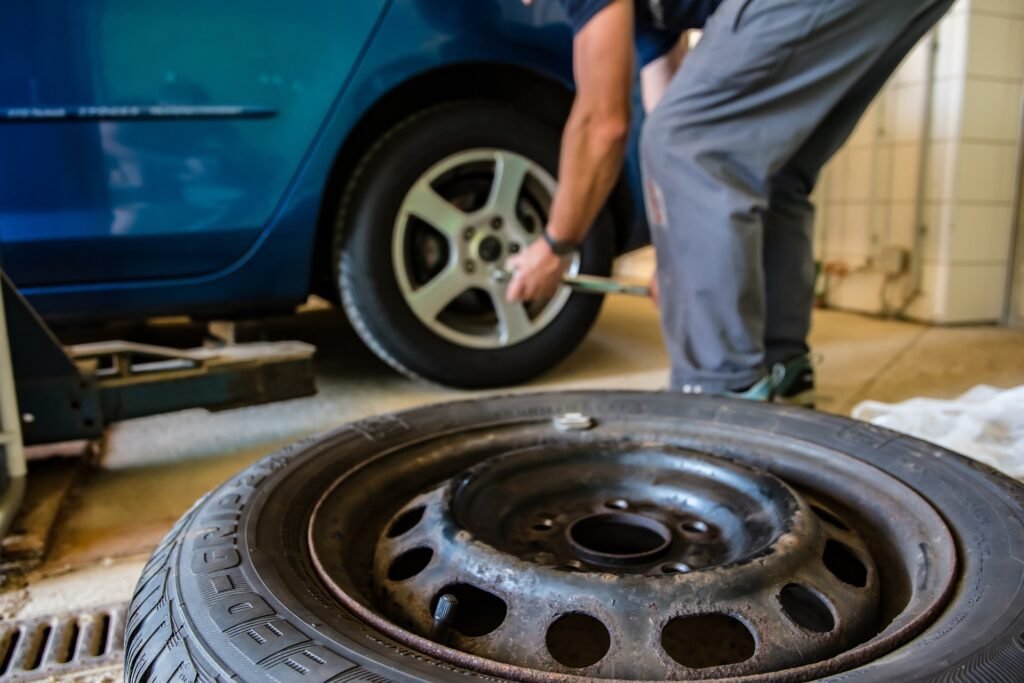
Two months later I went in for a routine tire rotation, and the mechanic called me over to look at my front left tire. The inside edge was worn down significantly more than the outside. Like someone had taken sandpaper to just that one part.
He said, “Your alignment is way off. How long has it been pulling?”
I said, “Maybe a couple months.”
He gave me the look. You know the one.
The alignment itself cost me around eighty-five dollars to fix. But because I waited two months, that front left tire was uneven enough that it needed replacing six months earlier than it should have. That was another hundred and twenty dollars I did not need to spend.
An eighty-five-dollar fix. Two hundred dollar lesson. Do not be like me.
What Wheel Alignment Actually Means
People hear “alignment” and picture something complicated happening deep inside the car. It is actually pretty simple to understand even if the fix itself needs a machine.
Your wheels are supposed to point in a very specific direction relative to the road and to each other. Not perfectly straight like soldiers in a line, but at precise angles that engineers calculated for your specific car. Those angles have names like “camber,” “toe,” and “caster,” but you do not need to memorize any of that.
What you need to know is this: when those angles are off, your tires are not rolling the way they should. They are scrubbing against the road slightly with every mile you drive. That scrubbing wears your tires unevenly. It also makes your car work harder, which affects fuel economy. And it makes the car pull or wander.
Think of it like walking with one shoe slightly twisted inward. You can still walk. But you are fighting your own foot with every step, and the bottom of that shoe is going to wear weird.
How Alignment Gets Off in the First Place
This is the part nobody tells you about. Alignment does not just go bad on its own overnight. Usually something causes it.
The most common cause is hitting a pothole hard. Not a little bump, but a proper drop where you feel it in your whole body. That kind of impact can knock your suspension components out of their settings instantly.
Hitting a curb is another big one. Even a slow-speed tap when parking can shift things. I once watched a friend parallel park and clip the curb lightly. He laughed it off. Six weeks later he was at the shop getting the alignment fixed.
Worn suspension parts also cause alignment to drift over time. Ball joints, tie rod ends, and control arm bushings all wear gradually. As they get sloppy, the wheel angles change slowly until one day you notice the car pulling.
Speed bumps taken too fast repeatedly also take a toll. Every hard impact goes into the suspension, and over enough time things shift.
Signs Your Alignment Needs Attention
You do not need a mechanic to tell you something is off. Your car tells you so itself. You just need to know what to listen to and feel for.
The car pulls to one side when you let go of the steering wheel on a flat, straight road. This is the clearest sign. Find a quiet empty road, drive at a normal speed, and gently release the wheel for a second or two. A well-aligned car goes straight. A misaligned car drifts.
Your steering wheel is off-center when driving straight. If the little logo in the middle of your wheel is tilted left or right when you are going perfectly straight, your alignment is off.
Uneven tire wear. Get out and crouch down to look at your tires from the front. If one edge is more worn than the other on any tire, that is a sign. The inside edge wearing faster usually means too much negative camber. The outside wearing faster usually means too much positive camber.
The car feels vague or wobbly at highway speeds. Like it cannot decide where it wants to go. You are constantly making tiny corrections to keep it in your lane.
Steering wheel vibration. Sometimes yes, though this can also be a wheel balance issue. If the vibration happens even at low speeds and gets worse the faster you go, get both alignment and balance checked.
I had three of these signs happening at once and still waited two months. Do not do that.
Can You Realign a Car Yourself at Home
Here is the honest answer. A proper four-wheel alignment requires a machine. There is no way around that. The machine hooks sensors to all four wheels and reads the exact angles, and then a technician adjusts the components until everything is within spec.
You cannot replicate that at home without spending thousands on equipment.
However, there are a couple of things you can do at home to check if alignment is likely the problem before spending money at a shop.
The straight road test. Find a flat, empty, straight road. Drive at around 30 mph. Gently let go of the steering wheel for two to three seconds. Watch which way the car drifts and how fast. This tells you whether you have a pull and how bad it is.
The steering wheel center check. Drive straight and look at your steering wheel. Is the logo or center mark straight? If it is rotated noticeably to one side, you have an alignment issue.
The tire wear check. Look at all four tires. Look at the tread from the front of the tire. Check if one edge is lower than the other. Even wear across the whole tire face is what you want.
These tests will not fix anything, but they confirm whether a shop visit is needed.
For toe alignment specifically, some people use a tape measure method to roughly check if the front wheels are pointed straight. You measure the distance between the front of the front tires and the back of the front tires and compare. If the measurements are very different, your toe is out of whack. But this is really just a rough sanity check, not a substitute for a machine alignment.
What Happens at the Alignment Shop
The first time I booked an alignment, I had no idea what to expect. I thought it would take two hours and cost a fortune.
It took about forty-five minutes and cost eighty-five dollars at an independent shop. Dealerships usually charge more, around one hundred to one hundred fifty dollars depending on your car.
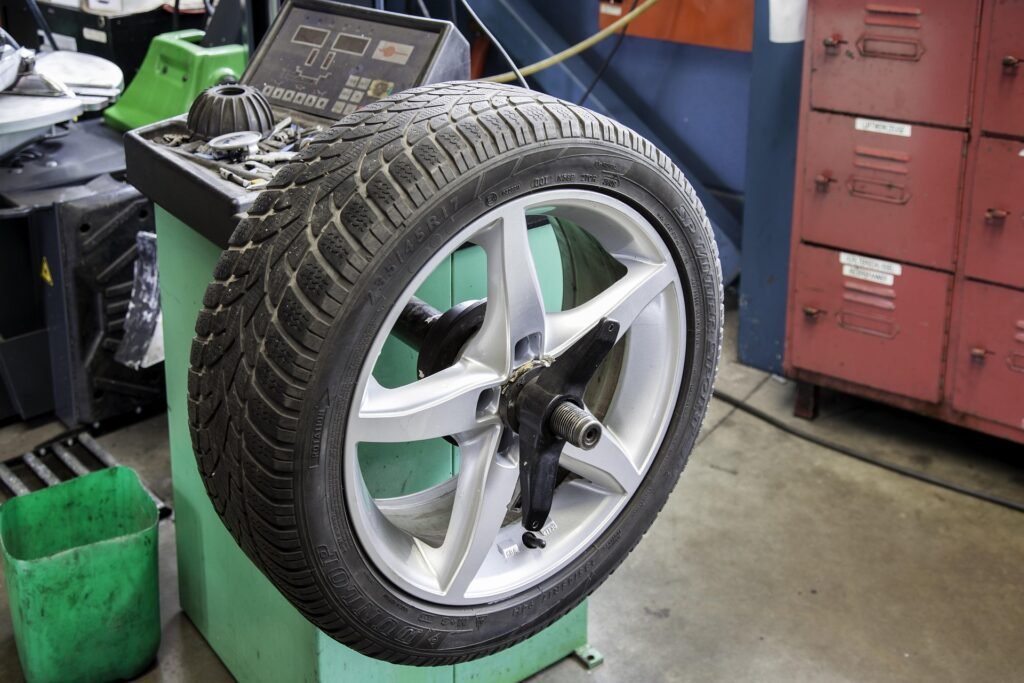
You drive in, and they put your car on a lift or alignment rack. They attach sensors or cameras to each wheel. The machine reads all your angles instantly and displays them on a screen, showing which ones are within spec and which are not.
The technician then adjusts the adjustable components. Usually the toe is the most adjustable. Camber and caster sometimes require additional parts or are fixed on certain cars.
When they are done, they print out a sheet showing the before and after angles. Keep that sheet. It tells you what was wrong and proves the work was done.
One thing I always do now is ask them to check for worn suspension parts while the car is on the lift. If a tie rod or ball joint is loose, they will usually spot it from up there. Better to know now than to pay for alignment and have it go off again in two weeks because a worn part keeps shifting.
How to Find a Good Alignment Shop
This matters more than people think. A bad alignment job is worse than no alignment job because it gives you false confidence.
Ask around. Word of mouth from people with similar cars is genuinely the most reliable way. Car forums for your specific make and model often have recommendations for trusted shops in different cities.
Look for a shop that shows you the printout before and after. Any decent shop will do this without being asked. If they try to hand your keys back without showing you numbers, ask for the sheet. If they cannot produce one, find another shop.
Check Google reviews and look specifically for comments about alignment work. People who had a good or bad experience with alignment specifically tend to mention it.
Avoid shops that try to push you into buying new parts before they have even put the car on the machine. A proper shop diagnoses first and then tells you what is needed.
I use a small independent shop that has been around for over fifteen years. Family owned, same technician does the alignment every time, and they always show me the printout. Built that trust over time by starting with small jobs first.
After the Alignment: What to Expect

The difference is immediate. Not dramatic, but very noticeable if you were used to the pull.
The car should track straight without you fighting the wheel. Steering should feel more precise. At highway speeds that wandery feeling goes away.
Check your tire pressures the same day or the day after the alignment. Correct pressure is important for alignment to do its job. The sticker inside your driver’s door shows the correct pressure for your specific car.
If the car still pulls slightly after alignment, mention it to the shop. Sometimes it takes a small readjustment. A good shop will bring it back in and check at no extra charge.
Also keep in mind that if you have one tire with significantly uneven wear already, that tire might cause a slight pull even after perfect alignment because its shape is no longer uniform. This is what happened to me. The alignment was fixed, but that front left tire was already damaged enough to cause a slight sensation. It sorted itself out once I replaced the tire.
How Long Does Alignment Last
There is no fixed rule. For most average drivers on decent roads, an alignment done today could still be fine two to three years from now.
But if you hit a serious pothole, clip a curb, or go through a rough patch of road regularly, get it checked sooner.
A quick check is free at many shops, even if adjustment costs money. Once a year is a sensible habit, especially if you do a lot of highway driving, where pulling is most noticeable.
Also get alignment checked any time you buy new tires. New tires on a misaligned car are a waste of money. You will wear through the new tires unevenly within months.
The Real Cost of Ignoring It
I already told you my story. An eighty-five dollar fix that I turned into a two hundred dollar lesson by waiting.
But beyond money, misaligned cars are genuinely less safe. Especially in emergency situations where you need the car to respond exactly where you point it. A car that is always pulling or wandering is harder to control when it matters most.
It is one of those things that feels minor until suddenly they are not.
Check your tires today. Do the straight road test this week. If something feels off, book the alignment. It is one of the cheapest things you can do to keep your car driving the way it should.

Adnan Aslam is passionate about helping everyday drivers understand their vehicles better. Through CarFixedExpert.com, he shares clear, step-by-step car maintenance guides written in simple language. His goal is to make basic repairs and maintenance easy, safe, and affordable for everyone.
He believes that even small car knowledge can save money and prevent major problems. His content focuses on practical advice, safety awareness, and beginner-friendly explanations.